In ancient and medieval Japan, various clans developed fighting arts for use on the battlefield. These encompassed the use of weapons such as the sword and spear, alongside methods of unarmed combat.
The earliest Japanese forms of unarmed combat developed from wrestling (Sumo) traditions. Over time, techniques became increasingly refined and numerous schools of jujutsu emerged. Among these traditions were martial arts associated with the Takeda, a clan that played a significant part in Japanese samurai history. In the modern period, Daitō-ryū Aiki-jūjutsu emerged as a highly sophisticated system comprising a very large body of techniques.
O Sensei
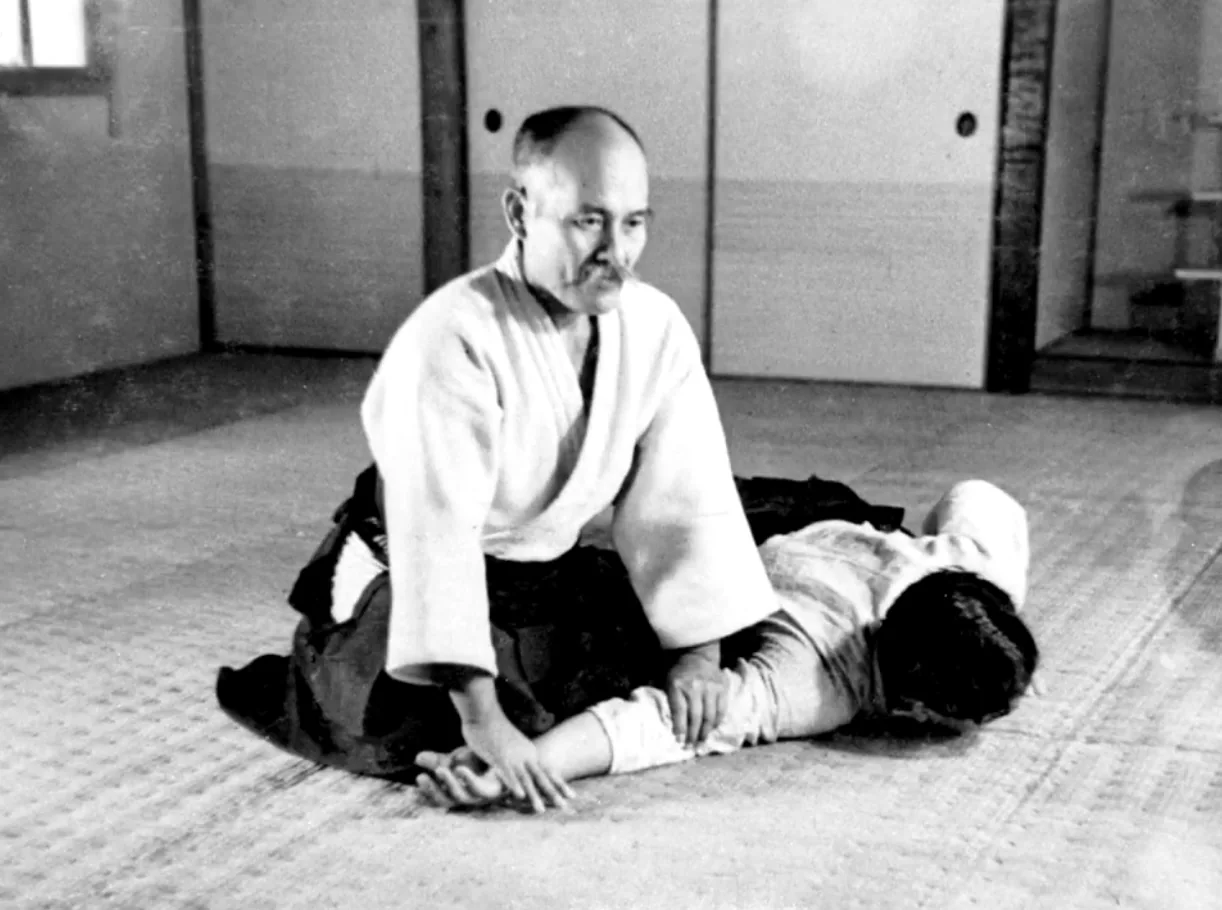
The founder of Aikido, Morihei Ueshiba (1883–1969), became an accomplished student of Daitō-ryū under Sokaku Takeda and also studied and practised extensively with traditional Japanese weapons.
Around 1925, Ueshiba underwent a profound spiritual experience which contributed to a transformation in his understanding of budō — the martial way. Increasingly, he came to believe that the highest purpose of budō was not the destruction of an opponent, but the protection and reconciliation of life.
Morihei Ueshiba (1883–1969), founder of Aikido
The Development of Aikido
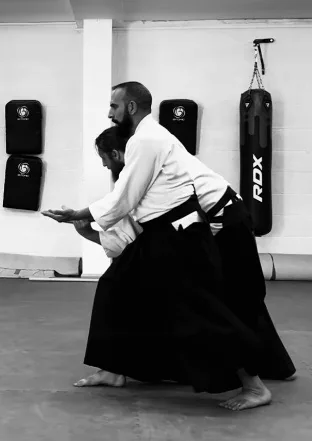
What followed over subsequent decades was the development of Aikido: an art drawing techniques, principles and movement from older Japanese combat systems, but placing particular emphasis upon defence, control and the redirection of an attacker’s force and intention.
Aiki
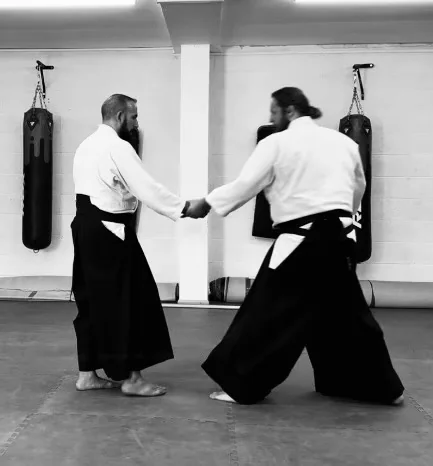
Central to the art is the concept of aiki. Although difficult to capture completely in a single definition, it can be understood physically as the ability to connect with another person’s structure and intention in such a way that their normal ability to organise their body against you is disrupted.
Aikido Today
Aikido means different things to different people. As a martial art, a form of physical practice, or even a way of life, it consequently exists across a broad spectrum. Some practitioners place greater emphasis upon health, movement and wellbeing; others upon the preservation and application of its martial principles. Neither need exclude the other.
In comparison with other martial arts, Aikido sits somewhere between the meditative, health-oriented qualities commonly associated with Tai Chi and the vigorous physical practice and practical throwing methods of Judo.
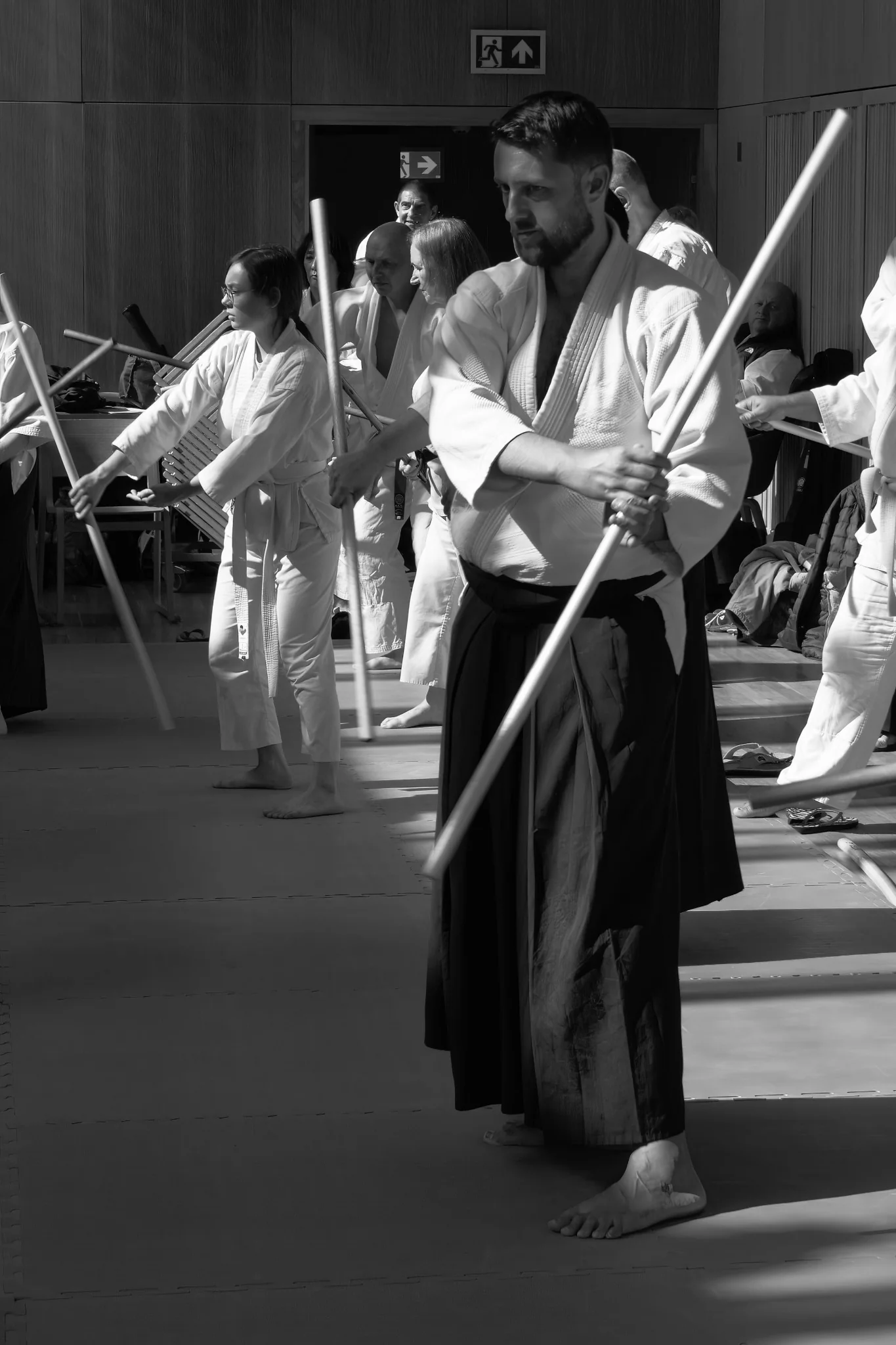
Sensei warming up for Jo practice.
What You Can Expect
With regular practice, it is hoped that students will take three things away from the dojo:
01
A calmer mind
Time spent completely absorbed in practice, providing a welcome separation from the stresses of everyday life.
02
Practical martial knowledge
An understanding of effective techniques and the principles of balance, movement, timing, connection and control that underpin them.
03
Improved physical wellbeing
A practice that develops cardiovascular fitness, mobility, coordination, balance and flexibility.
Instructor
Roger Wood Sensei
Roger Wood Sensei developed an early fascination with Aikido and the traditional Japanese fighting arts from which it emerged.
His father, Sgt Roger Wood Snr, was a tactical and specialist skills trainer in the police and taught Aikido to police officers throughout the UK as well as visiting officers from overseas.
As a boy of around nine or ten, Roger witnessed his father use his training during a violent confrontation when his family was set upon by thugs, bringing the situation quickly and decisively to an end. From that moment onwards he repeatedly asked his father to teach him. His father, however, was already teaching police officers for several hours a day, five days a week, and declined his son’s requests.
This led Roger to seek out other forms of martial training, including boxing and both Japanese and Brazilian Jujutsu. As a young man he competed nationally and, in the years before mixed martial arts became widely popularised, fought in a ground-fighting league in London.
He subsequently applied his skills during four years working as a door supervisor in central London and during a career of nearly twenty years as a police officer.
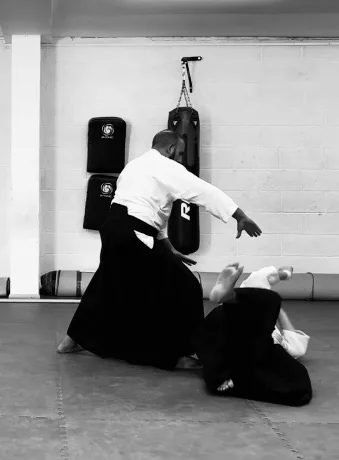
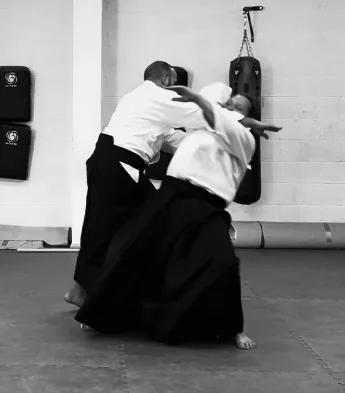
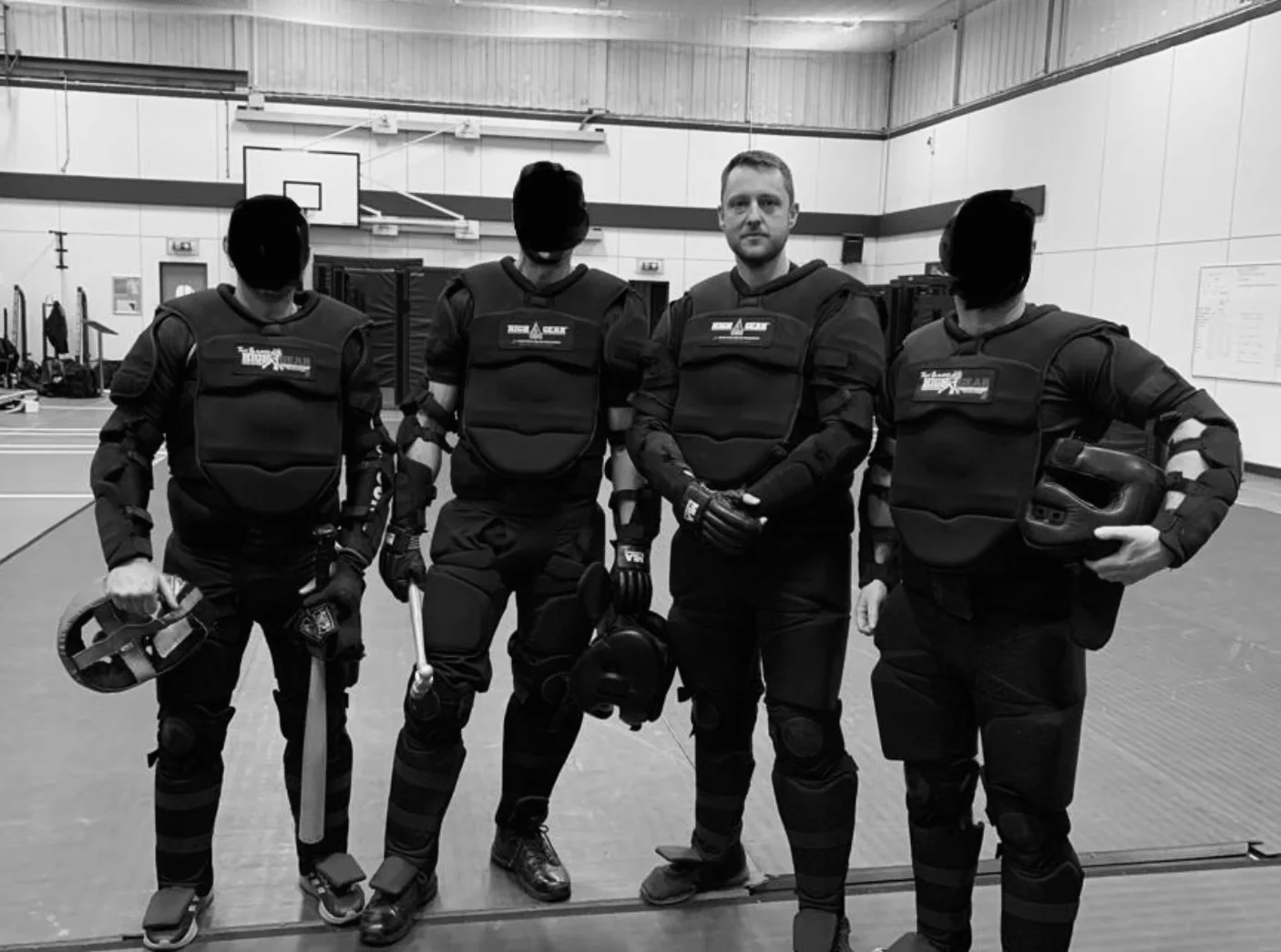
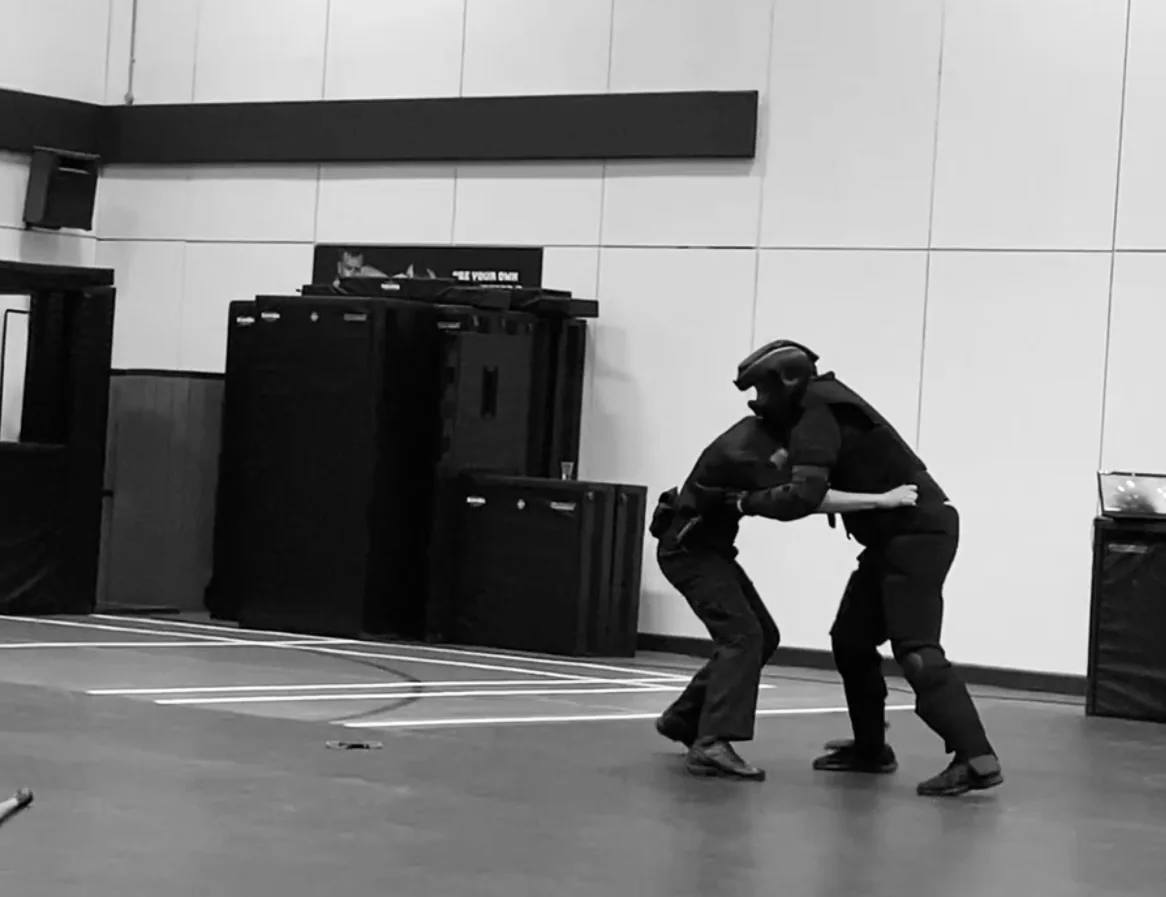
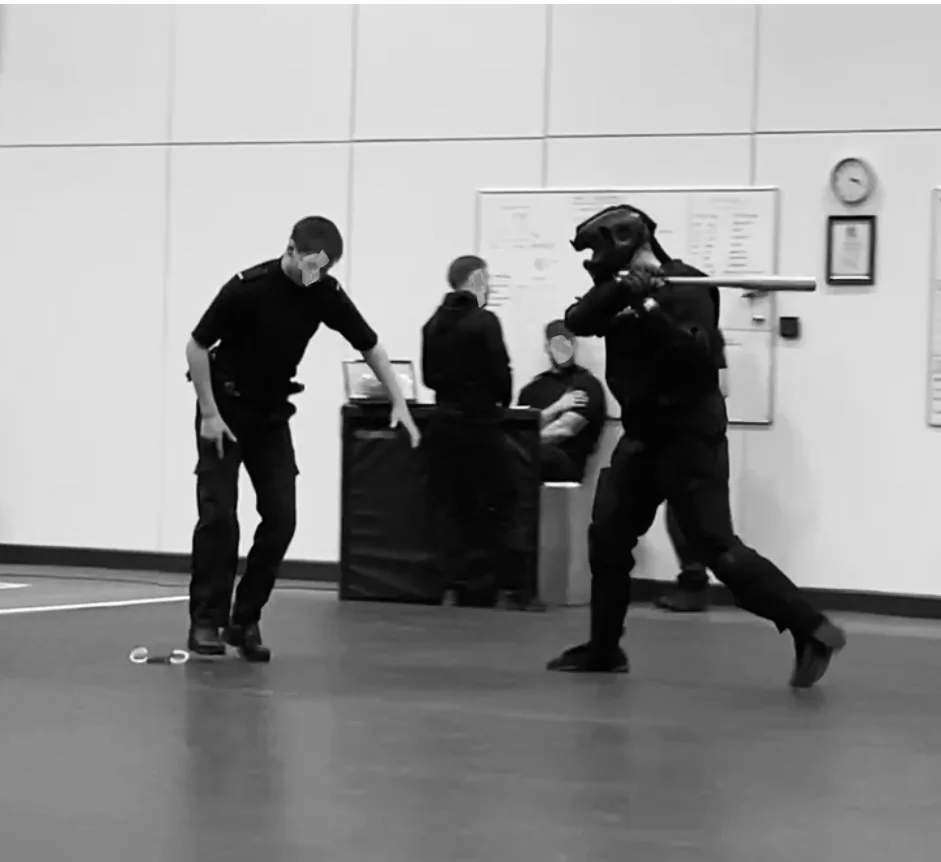
Teaching officer safety and defensive skills during his police career.
His interest in Aikido nevertheless persisted. Roger sought out and trained with different Aikido teachers before committing himself seriously to its study in 2011. By this time his father had retired and finally began to share some of his knowledge with him.
In 2022, Roger was awarded Shodan (1st Dan) by Tony Sargeant Shihan, a long-time student of Morihiro Saito Sensei and his personal representative in Europe.
Roger’s practice is principally influenced by Iwama-ryū Aikido, as transmitted from O Sensei through Morihiro Saito Sensei, while also drawing selectively upon Daitō-ryū Aiki-jūjutsu and the more flowing Aikikai approach associated with Yoshimitsu Yamada Sensei.
“As a former bouncer and police officer, with nearly twenty-five years’ combined experience, I have acquired an understanding of how Aikido can be used to practical effect in real-life situations.
However, Aikido has in truth given me so much more than the means to win confrontations. It has kept me healthy, both physically and mentally, afforded me the opportunity to travel the world, and enabled me to make great friends.
Above all, it has taught me to stay humble and given me a lifelong pursuit through which I constantly strive to cultivate myself.”
— Roger Wood Sensei, 2026
Beginners
Your First Class
Beginners are always welcome at South Downs Dojo and no previous martial arts experience or particular level of fitness is required. Your first session is free, giving you the opportunity to experience Aikido and the dojo without any commitment. Simply wear comfortable clothing that allows you to move freely; there is no need to purchase a uniform. Training is undertaken at your own pace, with an emphasis on learning safely and progressively.
Practice
Training Times
Monday06:00–07:00
Tuesday06:00–07:00
Wednesday19:00–20:00
Friday18:00–19:30
Private one-to-one sessions are also available on request.
Training Fees
Simple. Not for profit.
6-Week Beginner Course
£50
12 classes over six weeks
Regular Training
£5
per class
South Downs Dojo is run on a not-for-profit basis. Training fees contribute towards the cost of running the dojo.
Where We Train
Location
“The Dojo”
Westergate West Sussex PO20 3UH
Directions
Turn into Northfields Lane from Nyton Road. The Dojo is located approximately 100 yards along on the left.
Parking is available on the driveway with the yellow American school bus.